Ink & Everything
Full GST billing for a stationery shop, plus the tools a billing app doesn’t have: a smart buy list built from the shop’s own sales, school-kit pre-orders, bulk accounts and a nightly summary on WhatsApp.
- Client
- Velectico ↗
- Owned by
- Velectico
- Built for
- Stationery and school-supply shops
- We did
- Product design, engineering, smart inventory
- Services
- Software
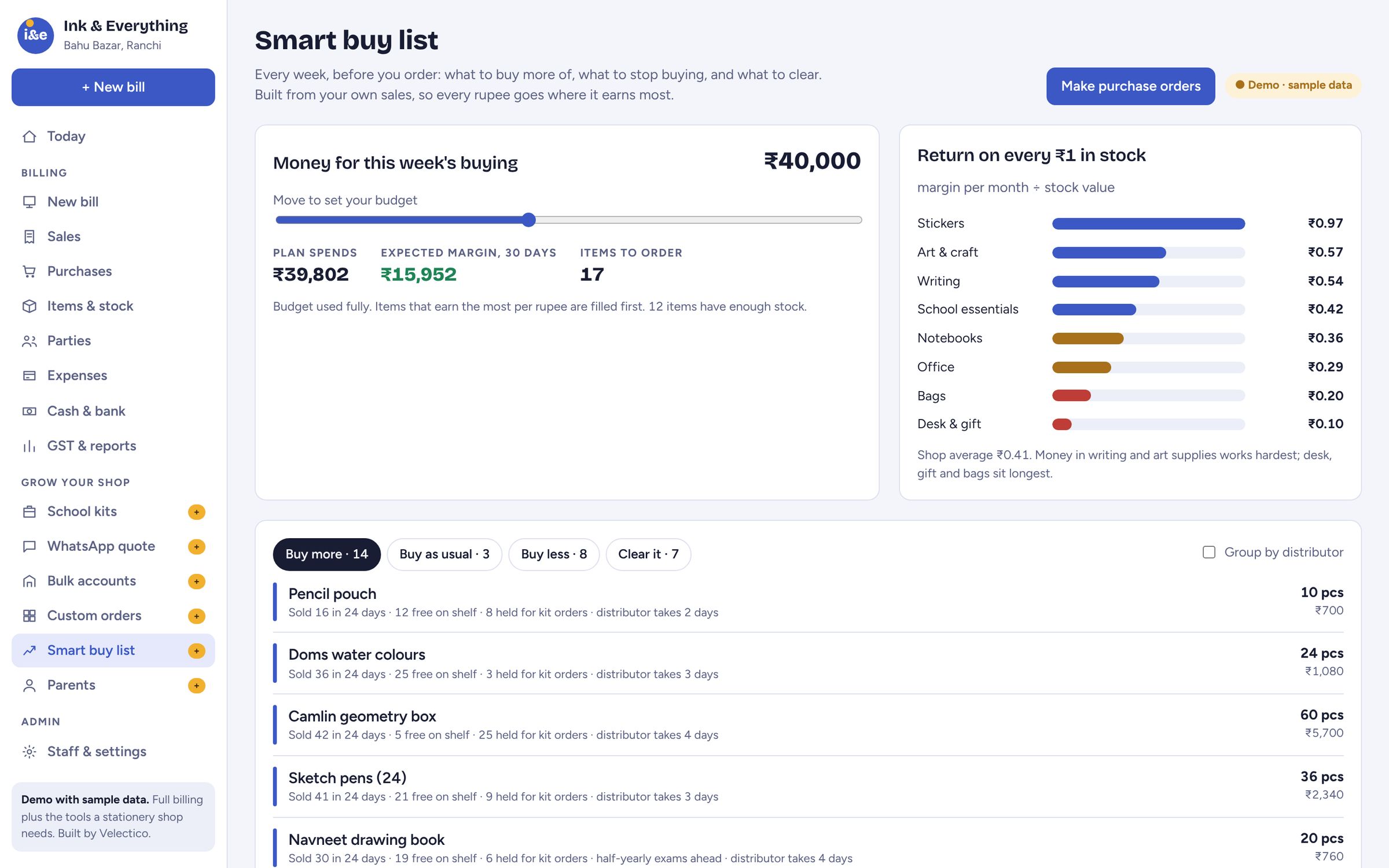
4answers for every item, every week: buy more, as usual, less, or clear it
The buy list fills the owner’s weekly budget with the items that earn the most per rupee first, and says what to buy less of and what to clear.
The challenge
A stationery shop carries hundreds of small items from many distributors, each with its own delivery time. Demand jumps with the school session, exams and festivals. Owners order from memory, so money sits in slow stock while best sellers run out, and the billing app they use can’t tell the difference.
What we built
- 01GST billing with barcode scanning, best sellers one tap away, estimates, returns and challans, and bills sent on WhatsApp.
- 02A smart buy list: every week, what to buy more of, what to buy as usual, what to buy less of and what to clear, inside a budget the owner sets.
- 03Return on every ₹1 in stock by category, so the owner sees where money works hardest and where it sits.
- 04School-kit pre-orders from class lists, with stock held for each kit and the shortfall added to the buy list.
- 05Purchases and supplier dues, expenses, cash and bank, GST returns and export to Tally.
- 06Offline billing that syncs when the internet comes back, staff roles with OTP approval, and a nightly summary on WhatsApp.
Built by Codzo's tech team
How we built it.
The smart buy list is the core of our smart inventory work, and the same thinking runs inside Cycle OS and Boutique OS. Here is how it decides.
- 01
It reads the shop’s own sales
For every item: how many sold in recent weeks, how many are free on the shelf, how many are already held for kit orders, and how many days its distributor takes to deliver.
- 02
It spends the budget where it earns
The owner sets this week’s buying money with a slider. Items that earn the most margin per rupee are filled first, until the budget is used, so slow stock never crowds out best sellers.
- 03
Four clear answers
Buy more, buy as usual, buy less, clear it. Each item says why: sold 42 in 24 days, five free on the shelf, 25 held for kits, distributor takes four days.
- 04
Return on every rupee in stock
Margin per month divided by stock value, by category. The owner sees that writing and art supplies work hardest and desk, gift and bags sit longest, and buys accordingly.
- 05
From list to purchase order
One tap turns the list into purchase orders, grouped by distributor, and a purchase adds stock the moment it’s received.
Walk through it.
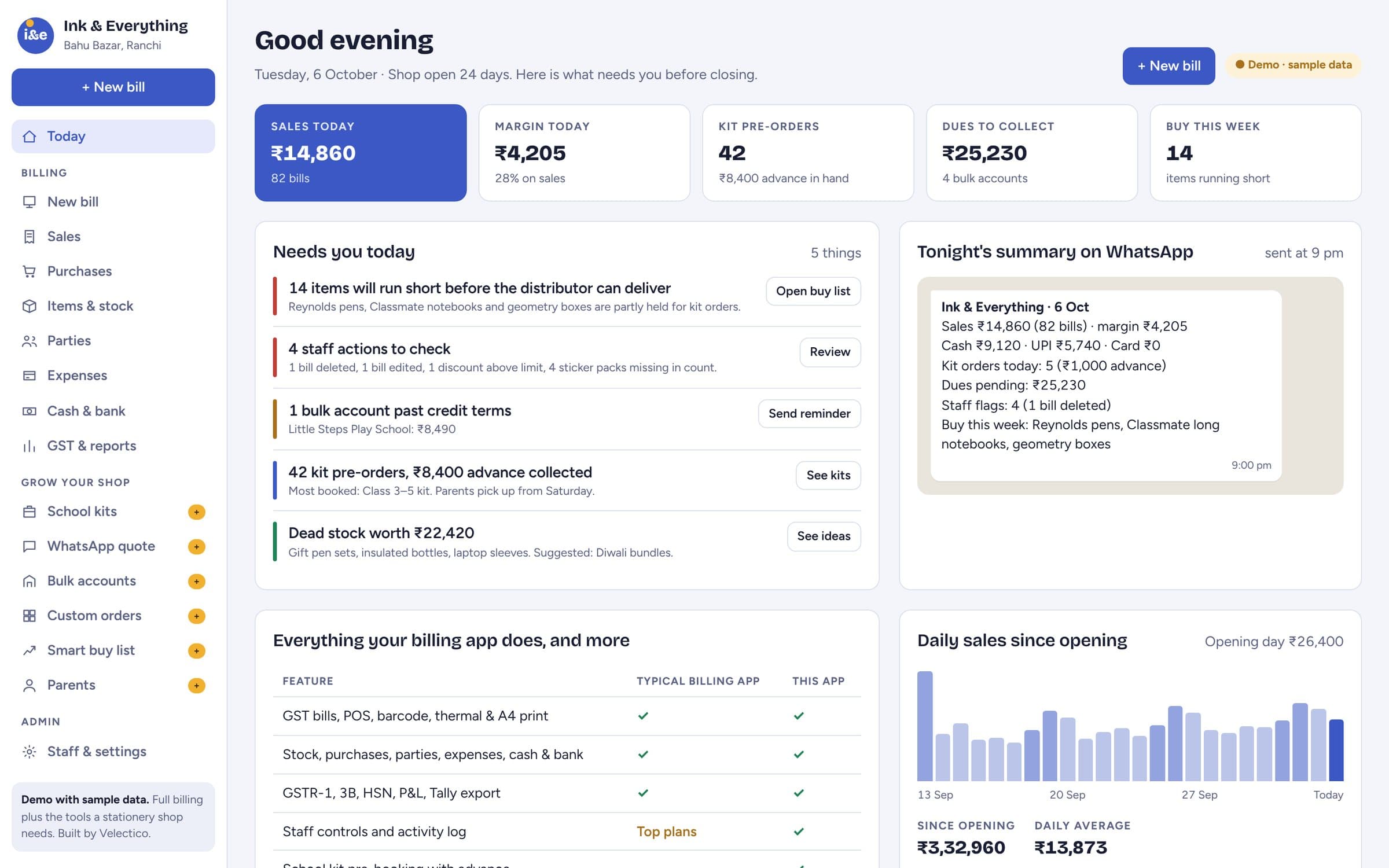
More of the product.
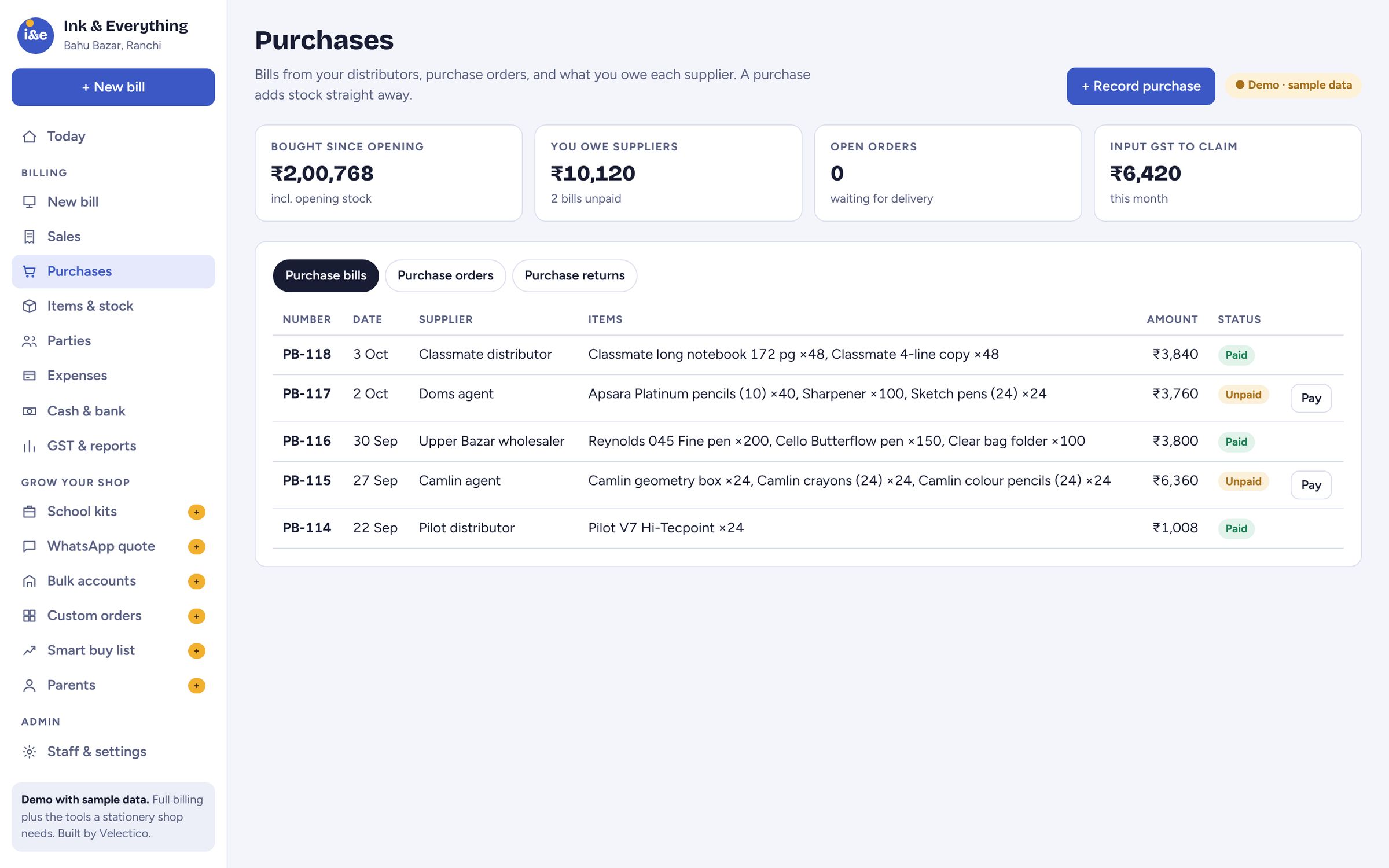
Purchases, orders and what the shop owes each supplier. 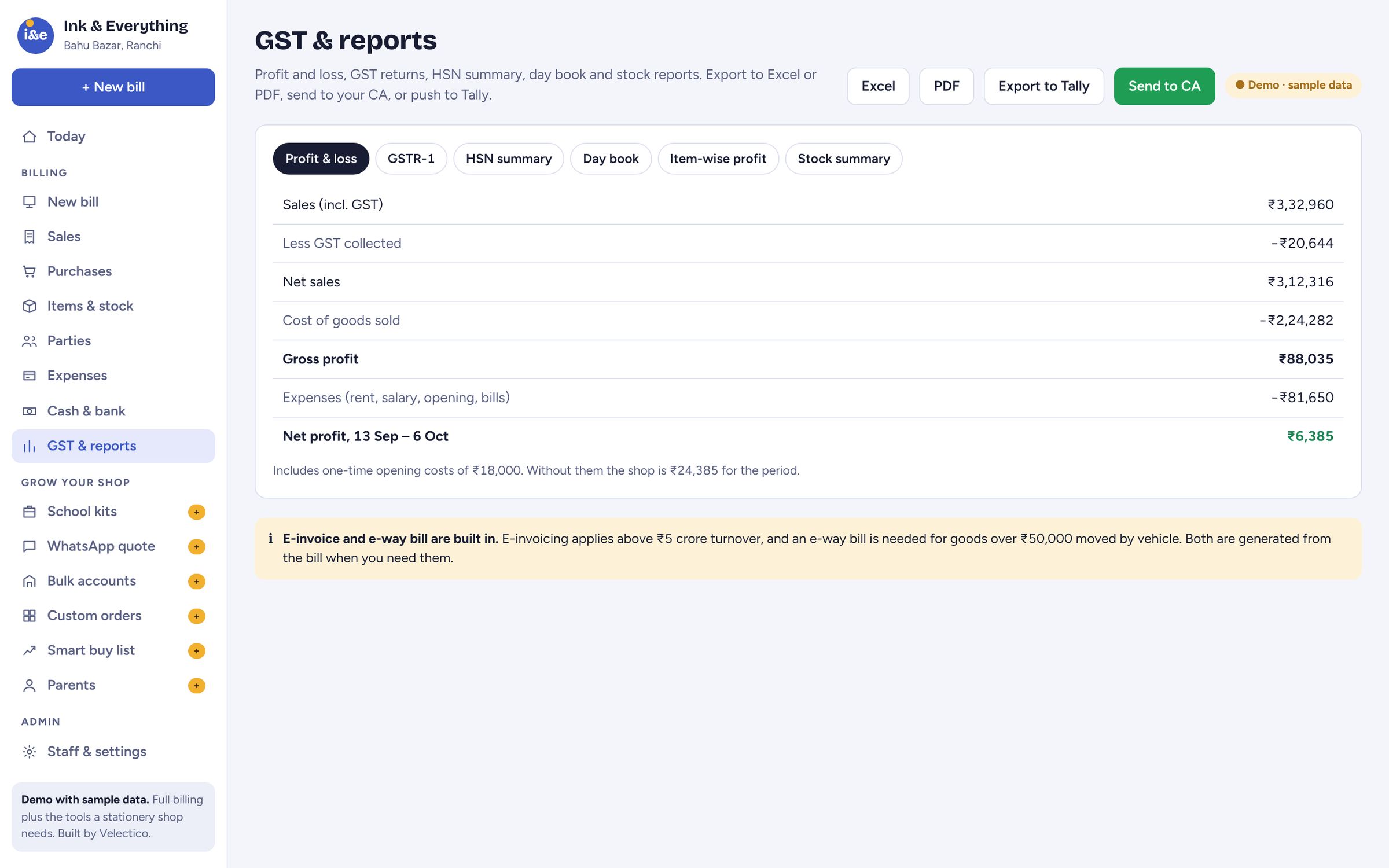
Profit, GST returns and export to Tally.
What we did